
Kitchen lighting: downlights, pendants or track?
How to light a kitchen properly: task lighting over worktops, ambient layers and feature pendants — with the wiring implications of each.
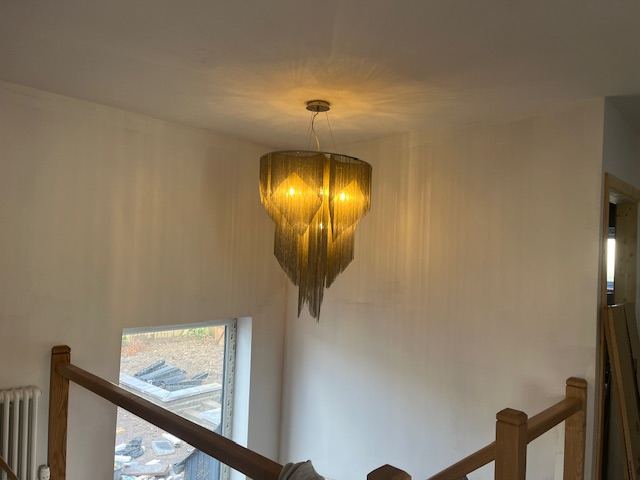
Most kitchens are lit by a grid of downlights that leaves the person at the worktop working in their own shadow. Good kitchen lighting is layered: task light where you chop, ambient light for the room, and feature light where it earns its place.
Each layer has different wiring implications, and the time to decide is at first fix — not after the tiling.
- Task: under-cabinet LED aimed at the worktop, not the ceiling
- Ambient: fewer, better-placed downlights on a dimmable circuit
- Feature: pendants over an island, on their own switched way
- Track suits awkward ceilings and later re-aiming
Task lighting is the layer people skip
Ceiling lights put your body between the lamp and the worktop. Under-cabinet LED strip removes the shadow entirely and uses very little power. It needs a driver in a serviceable location, which is a first-fix decision.
Pendants over an island
Islands need the feed position set before the units go in, because moving it afterwards means lifting a ceiling. Get the fitter's plan and we will first-fix the drops in the right places, allowing for the final worktop position.
Track and adjustable fittings
Track lighting suits sloped or beamed ceilings and lets you re-aim after the kitchen is in. It is also more forgiving where the layout is not final at first fix.
Common questions
How many downlights does a kitchen need?
Fewer than most plans show, once task lighting is doing its job. We position rather than grid.
Can pendants be added after the kitchen is fitted?
Sometimes, but the ceiling access needed is what makes it expensive. First fix is far cheaper.
Should kitchen lighting be dimmable?
Ambient layers, yes. Task lighting is generally more useful at full output.
Get a fixed price
Send your kitchen plan before the fitter starts — first-fix positions cost nothing to get right and a lot to change later.