
Emergency lighting test certificate and log in Port Talbot
The short version: emergency lighting testing and certification at a Port Talbot address is survey first, price second, certificate last. Neath Port Talbot County Borough Council area coverage, Port Talbot included.
- 1. Survey of escape routes, exits and high-risk task areas against the current layout
- 2. Common around SA12–SA13 — certificate issued and the on-site log book completed for each test
- 3. Around SA12–SA13: monthly function testing: brief simulated supply failure, confirming each luminaire illuminates
- 4. Annual duration testing: full rated discharge, confirming each fitting holds its stated period
There is no single price for emergency lighting testing and certification in Port Talbot, and anyone quoting one before looking is guessing.
A quote that arrives before any testing is a guess with a number on it. We do it the other way round. Two properties on the same street can differ on this entirely.
The practical question for a Port Talbot property is not what usually happens, but what this installation actually shows when it is tested. Neither of us benefits from finding that out halfway through.
We would rather turn a Port Talbot job down than take on something we cannot certificate honestly. The paperwork explains it in the same words we would use on site.
We take the view that certificate issued and the on-site log book completed should be established before a price is written, not after. That is slower to quote and cheaper to complete. Around SA12–SA13 it is certificate issued and the on-site that decides how long the visit takes.
The regulations set the standard; a new fit-out or change of layout altering escape sets the effort required to meet it at your particular address in Neath Port Talbot County Borough Council. Anything else found on the day is raised with you before it is touched.
If something falls outside what we can do properly, we say so and point you at who does it, rather than attempting it. It is one reason we quote after the survey rather than over the phone.
Written scopes mean you can compare us with anyone else on like-for-like terms. Anything we find that is outside this scope gets raised with you rather than added to the invoice.
A new fit-out or change of layout altering escape — the finding that most often explains the symptom you described.
Confirming a log book that has never been started takes minutes; assuming it wastes a visit.
A fire risk assessment identifying missing or untested emergency — common enough locally that we carry the parts for it.
If a premises licence or insurer requiring documented testing is present, the report will say so with a photograph.
Annual duration testing — measured, not estimated.
For steelworks-era terraces in Aberavon and Sandfields we plan certificate issued and the on-site log book completed around the way the building is used.
Expect survey of escape routes, exits and high-risk task areas to take up the first part of the appointment.
Monthly function testing — done before anything is priced.
This page is written for Port Talbot specifically — Neath Port Talbot County Borough Council area, SA12–SA13.
What the result can say
Why people in Port Talbot ask for it
- A fire risk assessment identifying missing or untested emergency lighting. It goes on the report.
- Common around SA12–SA13 — a premises licence or insurer requiring documented testing.
- Around SA12–SA13: a new fit-out or change of layout altering escape routes.
The process, step by step
- 1Survey of escape routes, exits and high-risk task areas against the current layout. It goes on the report.
- 2Common around SA12–SA13 — certificate issued and the on-site log book completed for each test.
- 3Around SA12–SA13: monthly function testing: brief simulated supply failure, confirming each luminaire illuminates.
- 4Annual duration testing: full rated discharge, confirming each fitting holds its stated period. It goes on the schedule either way.
Money side of it: function testing is quick. The annual duration test needs the system discharged fully, so it is scheduled when the building can be non-operational for the recharge period.
Port Talbot context
Port Talbot's coastal and industrial exposure means salt-air corrosion on external metalwork is common — external EV chargers and outbuilding CUs need IP-rated glands and stainless fixings.
Port Talbot is at the centre of the area we cover daily.
Anywhere between Neath and Port Talbot is standard coverage, not an extra.
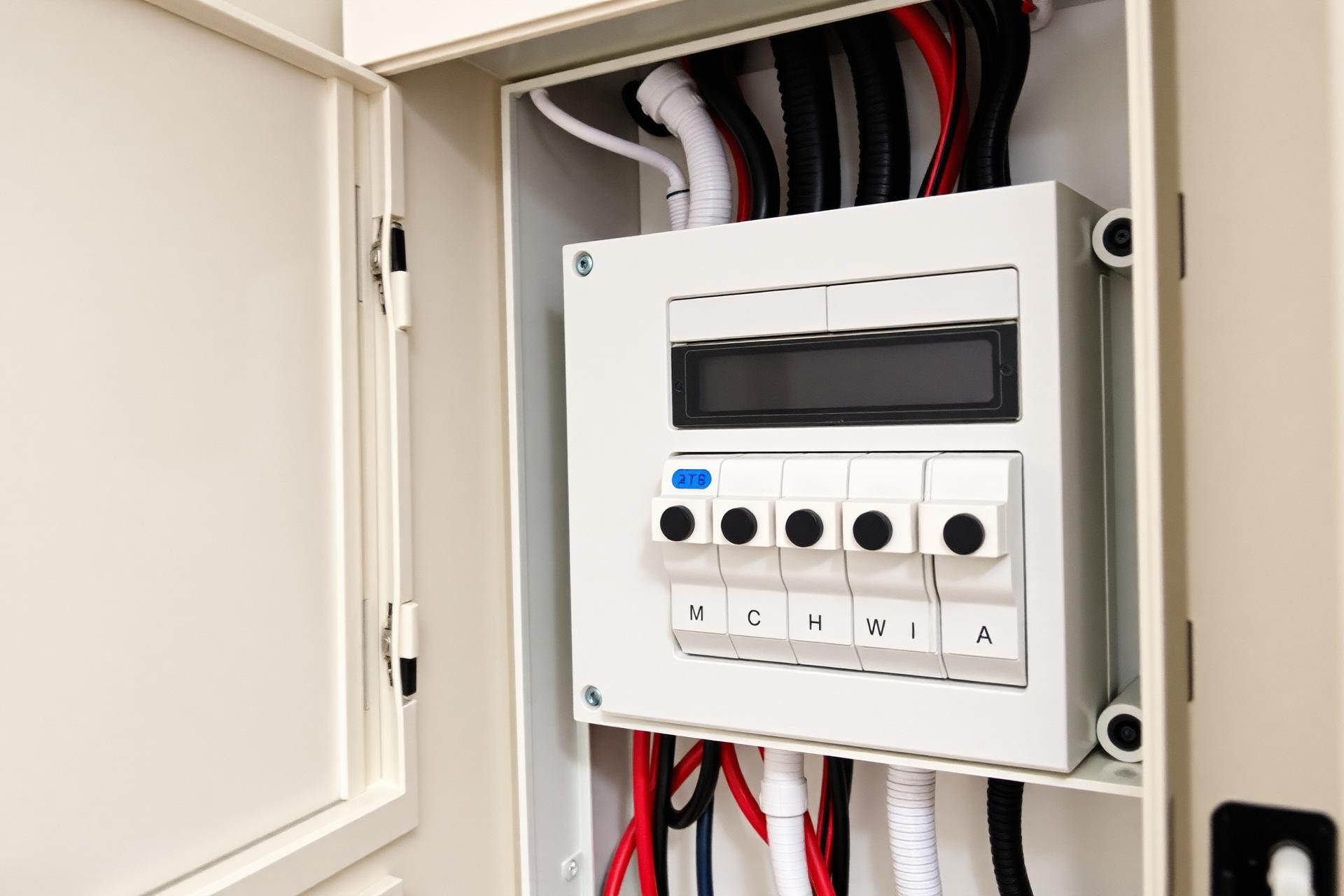
What the emergency lighting test certificate and log actually covers
Emergency lighting exists to get people out of a building when the normal supply fails. Because it sits idle almost all of the time, the only way to know it works is to test it — a monthly function test and an annual full-duration test, both recorded.
The Regulatory Reform (Fire Safety) Order 2005 places a duty on the responsible person to maintain fire safety provisions, which includes emergency escape lighting. BS 5266 sets out the testing regime.
Questions about the emergency lighting test certificate and log
Can you talk to my letting agent directly?
Yes, if you tell us who to contact. Access and reporting can both go through them.
Will you need to lift floors?
Only if the findings require it, and only with your agreement. We use existing access wherever it exists.
Do you clean up afterwards?
Yes, and we make good where we have lifted boards or cut access. Anything larger is agreed in advance.
Can I use my own materials?
If they are suitable and certified, yes. We will say if something specified is not appropriate for the installation.
Do you cover Port Talbot?
Yes — Port Talbot, Neath, Bridgend, Maesteg and the wider South Wales area.
Ask a question before booking — Emergency lighting testing and certification in Port Talbot
Describe what the property is doing and when it started. Most enquiries are answered properly within the day. We cover Port Talbot and the SA12–SA13 postcodes, including Bridgend, for emergency lighting testing and certification. Ask anything before booking — plenty of Port Talbot calls end with advice and no visit.
The short version: emergency lighting testing and certification at a Port Talbot address is survey first, price second, certificate last. Neath Port Talbot County Borough Council area coverage, Port Talbot included.