Titan Electrical Solutions
c.1925–1939 · 1930s Bay-Fronted Semi

Emergency Callouts for 1930s Bay-Fronted Semi properties in Barry

cavity brick (early cavity construction), plasterboard-on-batten internally on some ceilings. Roof-space access is straightforward, loft cabling is easy — but plasterboard-on-batten ceilings mean second-fix downlight work needs careful joist mapping.

Why the property type matters

Emergency Callouts on a 1930s semi is shaped by cavity brick (early cavity construction), plasterboard-on-batten internally on some ceilings. The scope is standard once the physical routing is planned around that construction.

Emergency Callouts on a 1930s semi in Barry is a physical problem before it is an electrical one. The stock is c.1925–1939, walls are cavity brick (early cavity construction), plasterboard-on-batten internally on some ceilings, and the practical constraint is that roof-space access is straightforward, loft cabling is easy — but plasterboard-on-batten ceilings mean second-fix downlight work needs careful joist mapping.

That shapes every line on the quote. We survey the porch or hallway, the cable route and the consumer unit location before pricing — because on this property type the standard scope is only standard once you know what you're working around.

Barry context

1930s Bay-Fronted Semi properties are a distinctive part of the Barry housing mix — Edwardian terraces around Holton Road and Cadoxton, 1930s semis in Barry Island and Cold Knap, and post-war estates in Gibbonsdown. We work on this stock weekly.

What to expect

  1. 01

    Photo or on-site survey

    Focus on the porch or hallway, the consumer unit location, and the intended cable route. Usually 15–30 minutes on-site or a short photo set.

  2. 02

    Written fixed quote

    Priced against your 1930s semi's specific construction, not a template. Route sketched, materials listed, no line-item surprises.

  3. 03

    Booked around access

    Diary planned for the access constraint that matters on this stock — roof-space access is straightforward, loft cabling is easy — but plasterboard-on-batten ceilings mean second-fix downlight work needs careful joist mapping.

  4. 04

    Certificate + evidence pack

    NICEIC certificate, photo evidence of hidden work, Part P where applicable — all emailed the evening the job signs off.

What we build into every quote

  • Cable routing planned around cavity brick (early cavity construction), plasterboard-on-batten internally on some ceilings — no chasing walls that don't take a chase, no mid-job "we couldn't get through".
  • Common 1930s semi findings we flag before quoting: ring finals extended into the kitchen or a rear extension without checking the R1+R2.
  • Access constraints priced into the diary — a 1930s semi in Barry isn't the same working day as a new-build with an empty garage.
  • Wiring generation on record (rewired 1980s–2010s) so the quote reflects what's actually in the house, not what the brochure assumes.

FAQs — 1930s bay-fronted semi in Barry

How do you handle cable routing on a 1930s semi?+

Roof-space access is straightforward, loft cabling is easy — but plasterboard-on-batten ceilings mean second-fix downlight work needs careful joist mapping. We mark the route at survey and price against it.

Is there a call-out or survey fee?+

No — surveys for Barry 1930s semi enquiries are free. You only pay once the fixed-price scope is agreed.

Do you need to see the property before quoting?+

For a 1930s semi usually yes — a 15-minute survey or a set of photos of the porch or hallway and the consumer unit is enough to write a fixed price.

What materials do you spec on this property type?+

18th Edition metal-clad CU; RCBO per circuit; additional CU for a loft or garage sub-main where the main board is short of ways. All on the written quote.

Construction & access

Roof-space access is straightforward, loft cabling is easy — but plasterboard-on-batten ceilings mean second-fix downlight work needs careful joist mapping.

Wiring generation & likely findings

Wiring generation on this stock is typically rewired 1980s–2010s; ring finals commonly extended without upgrading the CU. On a 1930s semi you should expect us to flag: ring finals extended into the kitchen or a rear extension without checking the R1+R2; back-boiler removals leaving abandoned wiring in the airing cupboard; loft-conversion feeds spurred off the upstairs ring rather than a dedicated circuit.

Materials we spec

Materials and methods we spec on 1930s bay-fronted semi work: 18th Edition metal-clad CU; RCBO per circuit; additional CU for a loft or garage sub-main where the main board is short of ways. Everything is priced on the quote — nothing added on invoice.

Nearby coverage

Beyond Barry itself, we regularly cover 1930s semi work across Penarth, Cardiff, Cowbridge on the same fixed-price model — same materials, same certificate format.

Summary

If you take one thing from this page: the awkward part is the routing, not the install. On a 1930s semi, roof-space access is straightforward, loft cabling is easy — but plasterboard-on-batten ceilings mean second-fix downlight work needs careful joist mapping — that's what the quote should reflect.

Emergency Callouts on 1930s bay-fronted semi stock — Barry

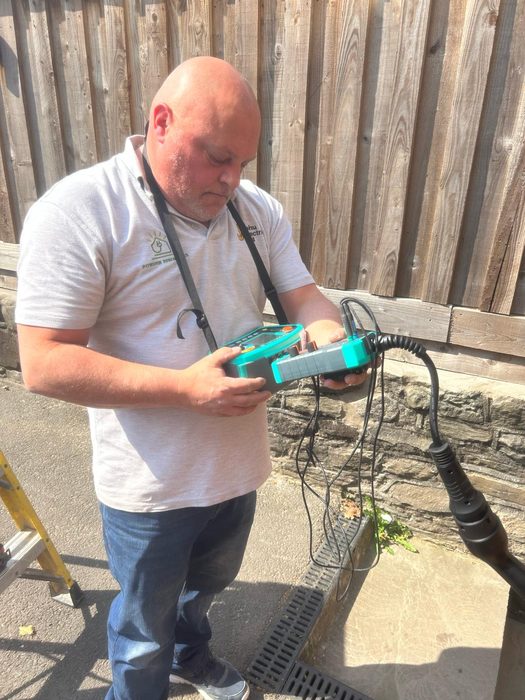
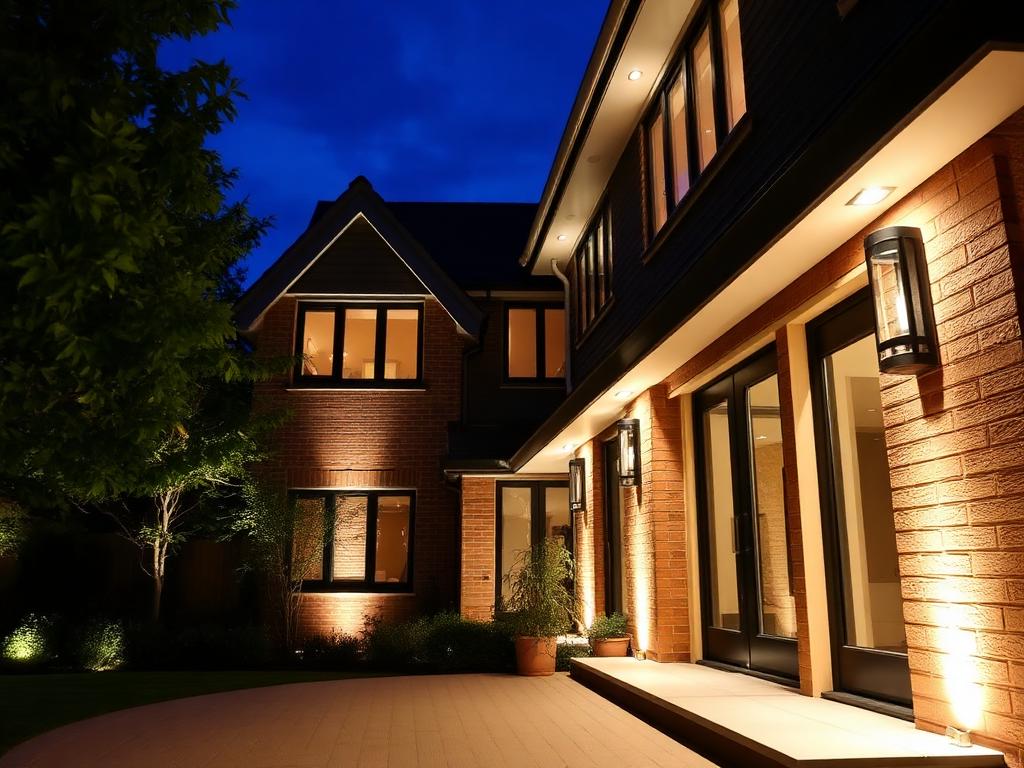
Emergency Callouts project in Barry: EICR testing in progress with a multi-function tester on a live circuit, delivered on a Edwardian terraces around Holton Road and Cadoxton address the Barry areaoutdoor socket and cable routing on a rear elevation completed during a emergency callouts job in Barry — Barry (CF62–CF63)

Barry emergency callouts for 1930s semi properties — quoted inside 24 hours

Calling is faster than a form when the 1930s semi has quirks (ring finals extended into the kitchen or a rear extension without checking the R1+R2). Two-minute triage, honest read on lead time, booked into the diary the same call.

Emergency Callouts on 1930s bay-fronted semis in nearby towns